VCSEL ULM-20MW Laser Diodes Ulm 850NM 84PCS
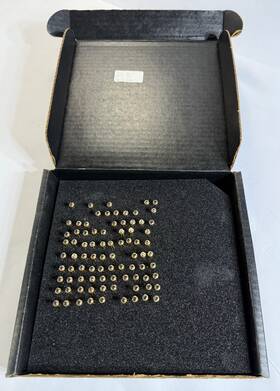
( Brand: Vcsel ), ( Manufacturer Part Number: ULM-20MW ), ( Part Type: Laser ), ( Unit Type: Unit ), ( Country Of Origin: United States )
Review VCSEL Ulm 20mw 850nm Laser Diodes 84pcs
The **VCSEL ULM-20mW 850nm Laser Diodes (84pcs)** represent a high-performance, precision-engineered solution for demanding optical applications requiring reliable, high-power vertical-cavity surface-emitting laser (VCSEL) performance. These devices are meticulously designed to deliver a consistent, stable output of **20 milliwatts (mW)** at an **850nm wavelength**, making them ideal for a wide range of industries, including optical sensing, barcode scanning, industrial metrology, LiDAR systems, and high-speed data communication. The VCSEL technology ensures a compact, low-divergence beam with excellent beam quality, minimizing alignment challenges and maximizing efficiency in optical systems. Each diode is housed in a robust, hermetically sealed package to protect against environmental factors such as moisture, dust, and thermal fluctuations, ensuring long-term reliability and operational consistency. The **84-piece bulk offering** provides cost-effective scalability for manufacturers, research labs, or developers integrating these components into larger assemblies without compromising on performance. With a low threshold current and high modulation bandwidth, these VCSELs are optimized for both continuous-wave (CW) and pulsed operation, making them versatile for applications requiring precise timing and high-speed modulation. Additionally, their single-mode emission and narrow spectral width ensure minimal interference, enhancing the accuracy of optical measurements and signal detection. Whether used in advanced industrial automation, medical diagnostics, or cutting-edge consumer electronics, these VCSELs deliver a balance of power, precision, and durability, positioning them as a superior choice for next-generation optical solutions.
**Pros and Cons of Buying VCSEL ULM-20mW 850nm Laser Diodes (84pcs)**
### **Pros**
1. **High Power Output** The 20mW power rating makes these VCSELs suitable for applications requiring moderate to high optical power, such as optical communication, sensing, or short-range free-space transmission.
2. **Wavelength Compatibility** The 850nm wavelength is widely used in data centers, fiber-optic communication, and near-infrared applications, ensuring compatibility with existing infrastructure and detectors.
3. **VCSEL Technology Advantages** Vertical-Cavity Surface-Emitting Lasers (VCSELs) offer several benefits over edge-emitting lasers:- **Low divergence** (circular beam profile), reducing the need for complex collimation optics.
- **High reliability** due to robust vertical structure.
- **Ease of integration** into arrays or modules.
- **Cost-effective mass production** due to wafer-scale manufacturing.
4. **Bulk Purchase Discount** Buying 84 units at once likely reduces the per-unit cost, making it more economical for large-scale projects or prototyping.
5. **Potential for Customization** Depending on the supplier, bulk orders may allow for custom packaging, wavelength adjustments, or additional specifications tailored to specific needs.
6. **Versatility in Applications**
- **Optical interconnects** (data centers, backplanes).
- **LiDAR and sensing** (short-range distance measurement).
- **Optical scanning and barcode reading**.
- **Medical and industrial imaging**.
7. **Long-Term Availability** VCSELs are a mature technology with a stable supply chain, reducing the risk of obsolescence compared to emerging or niche laser types.
---
### **Cons**
1. **Limited Customization** Standard 850nm VCSELs may not meet specialized requirements (e.g., specific modulation bandwidth, polarization control, or wavelength tuning), requiring additional components or modifications.
2. **Thermal Management Challenges** Higher power output (20mW) may necessitate heat sinks or cooling solutions to maintain performance and longevity, especially in high-density applications.
3. **Driver and Control Complexity** Driving VCSELs at 20mW may require precise current modulation (e.g., for data transmission) or external circuitry (e.g., TEC modules for temperature stabilization), adding to system complexity.
4. **Potential for Beam Quality Issues** While VCSELs generally have low divergence, misalignment or poor packaging could degrade beam quality, requiring careful handling or collimation optics.
5. **Supplier Dependence** Bulk purchases may lock you into a specific supplier, limiting flexibility if better alternatives emerge or if the supplier faces disruptions.
6. **Cost of Additional Components** Beyond the laser diodes, you may need:- **Optical collimators or lenses** (if beam shaping is required).
- **Modulation drivers or transimpedance amplifiers** (for communication applications).
- **Mounting hardware or cooling solutions**.
These add to the overall project cost.
7. **Regulatory and Safety Considerations** At 850nm, these lasers are classified as **Class 3R** (under IEC 60825-1), meaning they pose a moderate eye hazard if viewed directly. Proper enclosure or safety measures may be required for handling.
8. **Potential for Dead-on-Arrival (DOA) or Defects** Even with bulk orders, there is a risk of receiving defective units. Thorough testing may be necessary to ensure functionality.
9. **Wavelength Limitations** While 850nm is useful, it may not be ideal for applications requiring longer wavelengths (e.g., 1550nm for telecom) or shorter wavelengths (e.g., 650nm for visible applications).
10. **Learning Curve for Integration** If you lack experience with VCSELs, integrating them into a system may require research, prototyping, or consultation with experts, adding time and effort.
---
### **Ending Conclusion**
Buying **VCSEL ULM-20mW 850nm laser diodes in bulk (84pcs)** is a practical choice for applications demanding moderate optical power with a circular beam profile. The advantages of VCSEL technology such as low divergence, reliability, and ease of integration make them ideal for data communication, sensing, and short-range optical systems. However, the decision should account for potential challenges like thermal management, additional hardware requirements, and the need for precise control circuitry.
If your project involves **high-volume data transmission, LiDAR, or optical interconnects**, these lasers are a strong candidate. For **low-power or specialized applications**, alternatives (e.g., lower-power VCSELs or edge-emitting lasers) might be more suitable. Always verify the supplier s reputation, test units upon arrival, and budget for ancillary components to ensure a successful implementation.
---
### **Recommendation**
1. **Verify Application Fit** Confirm that 850nm and 20mW meet your power, wavelength, and beam profile requirements. If modulation bandwidth or polarization control is critical, check if the supplier offers compatible options.
2. **Assess System Integration Needs**
- Will you need collimators, modulators, or cooling?
- Do you have experience driving VCSELs, or will external expertise be required?
3. **Supplier Selection**
- Choose a reputable supplier with a track record in VCSEL sales (e.g., Thorlabs, Lumentum, or specialized distributors).
- Request samples or test units before committing to bulk purchase.
- Check return policies in case of defects.
4. **Budget for Full System Costs**
- Beyond the laser diodes, account for mounting, optics, drivers, and safety enclosures.
- Compare the total cost with alternatives (e.g., lower-power VCSELs or different wavelengths).
5. **Plan for Testing and Validation**
- Perform beam profiling, power measurements, and modulation tests to ensure performance.
- Consider environmental testing (temperature, vibration) if the application is rugged.
6. **Explore Alternatives if Needed**
- If 20mW is excessive for your needs, lower-power VCSELs (e.g., 5mW) may suffice.
- For longer-range applications, 1550nm VCSELs or DFB lasers might be better.
**Final Verdict:**For **cost-effective, high-volume optical projects** where 850nm and 20mW are suitable, this bulk purchase is a reasonable investment. However, ensure thorough planning for integration and system requirements to avoid unexpected challenges. If in doubt, consult with an optics engineer or supplier for guidance.
Details:
84pc ULM 20mW Vcsel in guaranteed working condition.
part #: ulm20mw price
- $600.00
specifications industrlasemr:
- brand: Vcsel
- mpn: Ulm-20mw
- part type: Laser
- unit type: Unit
- country of origin: United States
general industrlasemr:
- Medical/Lab Equipment Attachments Accessories > Lamps, Bulbs Laser Components > Laser Diodes
- condition: Used
seller industrlasemr:
- city: Saint Paul, Minnesota
- rating: 100.0%
- # reviews: 590
offer industrlasemr:
- availability: In Stock
- sold: 0
- options: Ship-to-home
- started: March 6, 2026
- best offers: True
- quantity: 1
returns industrlasemr:
- time: 30 Days
- method: Money back
- paid by: Buyer
- policy: Returns Accepted
shipping industrlasemr:
- carrier: USPS, FedEx
- class: Standard, Expedited, One-day
- cost: $0.00
- type: Calculated
- service: USPS Ground Advantage, FedEx 2Day, FedEx Standard Overnight
- transit: 3-6 Days
payments industrlasemr:
- wallet: Google-pay
- credit card: Mastercard
- other
Vcsel ULM-20MW Is Similar To:
- Trilumina 500116 Lca2 Corp Vcsel Board With Lens Lumentum Lidar 3d laser Array (27% similar) Trilling corp 500116 LCA2 Vcsel board with lens assembly. Condition: untested. Unknown specs. Unfortunately I have no specs on this item, it was received in an optics lot. The PCB is dated 2013 , the bag 2019...(January 8th, 2024)