HAMAMATSU R4220 Photomultiplier
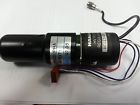
( Brand: Hamamatsu ), ( Model: R4220 ), ( Country/region Of Manufacture: Japan )
Review HAMAMATSU Photomultiplier
Hamamatsu R4220 Photomultiplier Tube - High-Performance, Sensitive Photon Detector
The Hamamatsu R4220 Photomultiplier Tube (PMT) is a sophisticated photon detection device, renowned for its exceptional performance and sensitivity. This PMT, manufactured by the esteemed Hamamatsu Photonics K.K., is a versatile instrument used in a wide range of applications, including particle physics, medical imaging, and astronomical research.
The R4220 PMT features a photocathode with a peak quantum efficiency of approximately 20% at 420 nm, making it highly sensitive to blue and ultra-violet light. It boasts a large active area of 8 mm in diameter, ensuring a broad detection range. The PMT is equipped with a bialkali photocathode, which offers a wide spectral response range of 200-700 nm.
The R4220 PMT is capable of handling high-rate photon events with ease, thanks to its 6-stage dynode system. This design provides a large gain of up to 5x10 6 , amplifying weak signals to a level that can be easily measured. The PMT also exhibits low dark current and dark noise, ensuring minimal interfering signals in low-light conditions.
The Hamamatsu R4220 Photomultiplier Tube is housed in a rugged, high-vacuum-compatible glass cylindrical envelope. It is designed to withstand harsh environments, making it suitable for use in various scientific and industrial applications. The PMT can be easily integrated into your system due to its standard pin configuration (9-pin base).
In summary, the Hamamatsu R4220 Photomultiplier Tube is an advanced, high-performance instrument that offers exceptional sensitivity, a wide spectral response range, and the ability to handle high-rate photon events. Its robust construction, coupled with its versatile design, makes it an ideal choice for a wide range of photon detection applications.
The Hamamatsu R4220 Photomultiplier Tube (PMT) is a high-performance optoelectronic component widely used in various scientific applications, such as particle physics, astronomy, and spectroscopy. Here are some of its pros and cons:
Pros:1. High Quantum Efficiency: The Hamamatsu R4220 PMT offers a high quantum efficiency, which means it can convert a large percentage of incoming photons into electrical signals. This makes it suitable for low-light applications.
2. High Dynamic Range: The PMT has a high dynamic range, allowing it to detect signals over a wide range of intensities.
3. Low Noise: The R4220 PMT has low noise levels, which helps to improve the signal-to-noise ratio and the overall sensitivity of the system.
4. Durable and Reliable: Hamamatsu PMTs are known for their durability and reliability, making them a popular choice for long-term, high-stress applications.
Cons:1. High Cost: The Hamamatsu R4220 PMT is relatively expensive compared to other PMTs. This could be a significant factor for researchers or institutions with limited budgets.
2. Requires Special Handling: PMTs, including the R4220, require careful handling due to their fragile nature. This could potentially increase the cost of maintenance and repair.
3. Power Consumption: PMTs, in general, consume more power compared to solid-state photodetectors. This could be a concern for battery-powered or low-power applications.
In conclusion, the Hamamatsu R4220 PMT is a high-performance, durable, and reliable optoelectronic component. However, its high cost, power consumption, and the need for special handling could be potential drawbacks. If budget is a concern, other PMTs or solid-state photodetectors might be more suitable. However, for applications that require high performance and reliability, the Hamamatsu R4220 PMT could be a worthwhile investment.
Recommendation: If budget permits and high performance is a priority, the Hamamatsu R4220 PMT is a recommended choice. For applications where cost and power consumption are critical factors, it may be worth considering other options or negotiating with the supplier for a better deal.
Details:
Hamamatsu R4220pha side on with socket.
part #: r4220 prices
- $345.00-$599.00
specifications industrlasemr:
- brand: Hamamatsu
- model: R4220
- country/region of manufacture: Japan
Payments industrlasemr:
- PayPal
Ratings:
- Fast shipper. Used as stated. in nice condition. Carefully packed. 07-01-17
- Everything Good!!! 05-05-17
- fast, good communication, proper working item, perfect 05-10-17
- fast shipping! 04-12-17
- Thanks! 04-19-17
Returns industrlasemr:
- policy: no returns
Seller industrlasemr:
- zipcode: 90706
- city: Bellflower, California
Shipping industrlasemr:
- cost: $0.0
- handling: 3 days
- type: Flat
Offer industrlasemr:
- bids: 0
- Started: August 25, 2017, 3:07 pm
- quantity: 10
- best offer: true
- Sold: 0
General industrlasemr:
- condition: Used
- businessindustrial > mroindustrial supply > lightinglasers > industrial lasers lighting lasers
- in stock: Yes
Hamamatsu R4220 Is Similar To:
- 1p28-3 Hamamatsu Photomultiplier Photocathode Tube (66.7% similar) Thanks shipping is by free USPS priority, lower 48 states. See photos overall good clean condition, untested. You are buying on one used Hamamatsu 1P28-3 photomultiplier photo cathode tube plus cable...(January 20th, 2018)
- 1p28-4 Hamamatsu Photomultiplier Photocathode Tube (66.7% similar) See photos overall good clean condition, untested. Thanks shipping is by free USPS priority, lower 48 states...(October 30th, 2017)
- 1p28ha Hammamatsu Hamamatsu Photomultiplier Tube New Piece (60.7% similar) Hamamatsu photomultiplier tube 1P28HA LOC1173-29159...(May 28th, 2018)
- 402971 Hamamatsu Photomultiplier Tube (82.4% similar) Hamamatsu 1P28 photomultiplier tube removed from a working unit that was local university science lab. Please feel free to at: stores. No manuals, standard power cords, accessories, software etc are included unless pictured and noted in the. All equipment is sold-as-is...(June 17th, 2018)
- 6199 Hamamatsu Photomultiplier Tube Near (73.2% similar) Tech-harvester offerings...(June 23rd, 2017)
- 931a Hamamatsu Photomultiplier Tube W (76.5% similar) Elector Marvin is a 9-5 Mon-Fri business. Item condition: used - this is untested. Its often to late solve them if you wait. Listed for Marc. Problems are questions that were not asked before the offer closed...(October 2nd, 2017)
- 952870-01 Hamamatsu Photomultiplier Tube Pmt (74.7% similar) Shipping quote is for the USA...(June 25th, 2017)
- C1556-51 R105 Hamamatsu Photomultiplier Tube Amplifier Assembly (59.6% similar) This sale is for a laboratory surplus Hamamatsu model C1556-51 amplifier and R105 photomultiplier tube with the assembly shown in photos. Buyer to pay for shipping. This assembly was removed from a fully functioning piece of obsolete laboratory measuring system...(April 7th, 2018)
- C2761 Hamamatsu Photomultiplier Cooler (78.3% similar) Hamamatsu C2761 photomultiplier cooler cosmetic condition: unit has scuffing from average use...(March 26th, 2018)
- C2773 Hamamatsu Photomultiplier Cooler (78.3% similar) This is a Hamamatsu C2773 photomultiplier cooler it in good aesthetics condition. It powers up and not further tests were done. It came from a working system not manual included...(June 2nd, 2018)
- C4181-01 Hamamatsu Photomultiplier Assembly W-optics (67.5% similar) 30 day right of return if not satisfied. Photos show everything that is included...(October 21st, 2017)