HONEYWELL GG1342AE44 Gyroscope Laser T12-D5
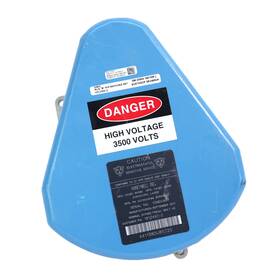
( Brand: Honeywell ), ( Manufacturer Part Number: GG1342AE44 ), ( Part Type: Gyroscope Laser )
Review HONEYWELL Gyroscope Laser Parts
The **Honeywell GG1342AE44 Gyroscope Laser T12-D5** is a high-precision, dual-axis, fiber-optic gyroscope (FOG) designed for demanding inertial navigation and stabilization applications where unparalleled accuracy, reliability, and robustness are essential. Engineered by Honeywell s advanced inertial sensing division, this gyroscope leverages cutting-edge laser interferometry and fiber-optic technology to deliver exceptional performance in dynamic environments, making it an ideal choice for aerospace, defense, unmanned systems, and high-end industrial automation. With a compact yet ruggedized design, the GG1342AE44 is built to withstand harsh conditions, including extreme temperatures, vibration, and shock, ensuring consistent operation in the most challenging missions. Its dual-axis configuration provides precise angular rate measurements with minimal drift, enabling real-time stabilization, attitude determination, and navigation with sub-degree accuracy critical for applications such as drone stabilization, missile guidance, autonomous vehicles, and inertial measurement units (IMUs). The device integrates a high-stability laser source and a sophisticated Sagnac interferometer, which detects rotational motion by measuring phase shifts in light traveling through a coiled optical fiber. This optical approach eliminates mechanical wear and tear, reducing maintenance requirements and extending operational lifespan compared to traditional mechanical gyroscopes. Additionally, the GG1342AE44 features advanced digital signal processing and calibration algorithms to mitigate environmental biases, ensuring high fidelity in both static and high-g dynamic scenarios. Whether deployed in military-grade systems, precision robotics, or next-generation aerospace platforms, this gyroscope sets a benchmark for performance, offering a seamless blend of innovation and engineering excellence. Its compatibility with Honeywell s broader inertial sensor ecosystem further enhances its utility, allowing for seamless integration into complex navigation and control architectures.
The Honeywell GG1342AE44 is a high-end gyroscope-based inertial measurement unit (IMU) designed for precision navigation, aerospace, and defense applications. Below is a detailed breakdown of its pros and cons, followed by a conclusion and recommendation.
---
### **Pros of the Honeywell GG1342AE44**
1. **Exceptional Accuracy and Precision**
The GG1342AE44 is engineered for high-precision navigation, offering low bias instability (typically in the sub-pph (parts per hour) range) and high dynamic range. This makes it ideal for applications requiring millimeter-level positioning, such as drone navigation, autonomous vehicles, or inertial navigation systems (INS) in aerospace.
2. **Laser Gyroscope Technology**
As a laser gyroscope (ring laser gyro, or RLG), it avoids the mechanical limitations of vibrating gyroscopes (e.g., MEMS or fiber optic gyros) in high-g environments. RLGs are less susceptible to shock, vibration, and temperature fluctuations, making them reliable in harsh conditions.
3. **Wide Temperature Range**
The unit is designed to operate across a broad temperature spectrum (typically -40 C to 85 C), with some variants supporting even wider ranges. This robustness is critical for military, aerospace, and outdoor applications where environmental conditions vary significantly.
4. **High Dynamic Performance**
The GG1342AE44 excels in high-g maneuvers (e.g., aircraft turns, missile guidance, or rapid vehicle movements) without significant degradation in performance. This is a key advantage over lower-cost MEMS gyroscopes, which may suffer from nonlinearities or drift in dynamic conditions.
5. **Long-Term Stability**
RLGs generally exhibit lower drift over time compared to MEMS or fiber optic gyros, making them suitable for long-duration missions (e.g., satellite stabilization, deep-sea exploration, or extended drone flights).
6. **Redundancy and Fault Tolerance**
Honeywell s RLGs are often used in redundant configurations (e.g., dual or triple gyro setups) for critical systems where failure is unacceptable. The GG1342AE44 can be integrated into such systems for enhanced reliability.
7. **Military-Grade Durability**
The unit is built to withstand harsh environments, including vibration, shock, and electromagnetic interference (EMI), making it suitable for defense applications like missile guidance, UAVs, or naval systems.
8. **Compatibility with Advanced Navigation Systems**
It can be paired with other Honeywell inertial sensors (e.g., accelerometers, magnetometers) or GPS systems to form a robust INS/GNSS hybrid navigation solution, improving accuracy in GPS-denied environments.
9. **Proven Track Record**
Honeywell is a well-established manufacturer of inertial sensors with decades of experience in aerospace and defense. The GG1342AE44 benefits from this heritage, ensuring reliability and support from a trusted supplier.
10. **Customization and Integration Options**
Honeywell offers tailored solutions for specific applications, including custom packaging, mounting options, and interface protocols (e.g., ARINC, MIL-STD-1553, or Ethernet). This flexibility allows for seamless integration into existing systems.
---
### **Cons of the Honeywell GG1342AE44**
1. **High Cost**
The GG1342AE44 is a premium product, and its price reflects its high performance. For applications where lower accuracy is acceptable, cheaper alternatives (e.g., MEMS gyroscopes or fiber optic gyros) may be more cost-effective.
2. **Complexity and Maintenance**
RLGs require precise calibration, alignment, and maintenance compared to MEMS gyroscopes. They may need specialized equipment for testing and recalibration, increasing operational overhead.
3. **Size and Weight**
While not excessively large, RLGs are bulkier and heavier than MEMS-based IMUs. This can be a limitation in space-constrained applications (e.g., small drones, wearable devices, or consumer electronics).
4. **Power Consumption**
The GG1342AE44 consumes more power than MEMS gyroscopes due to its laser-based operation. This may be a consideration for battery-powered systems where power efficiency is critical.
5. **Limited Commercial Availability**
RLGs are primarily used in defense, aerospace, and high-end industrial applications. Commercial availability may be limited compared to off-the-shelf MEMS IMUs, which are widely used in consumer electronics, robotics, and IoT.
6. **Cost of Supporting Infrastructure**
Deploying RLGs often requires additional infrastructure, such as calibration labs, specialized mounting hardware, or redundant systems for fault tolerance. These add to the total cost of ownership.
7. **Sensitivity to Contamination**
RLGs can be sensitive to dust, moisture, or particulate matter, which may affect performance over time. Proper sealing and environmental protection are necessary to maintain accuracy.
8. **Longer Development Cycle**
Integrating an RLG into a system may require more time and testing compared to MEMS-based solutions, especially for new or unproven applications.
9. **Limited Consumer Market Support**
Unlike MEMS gyroscopes, which have extensive driver libraries and SDKs for consumer applications, RLGs are often supported by niche vendors with limited software resources.
10. **Potential for Obsolescence**
While Honeywell s RLGs are robust, advancements in MEMS and fiber optic gyro technology may eventually render them less competitive in cost-sensitive markets. However, their longevity in defense and aerospace is well-established.
---
### **Conclusion**
The Honeywell GG1342AE44 is a **high-performance, high-reliability inertial gyroscope** tailored for applications where precision, durability, and dynamic stability are non-negotiable. It excels in aerospace, defense, and industrial navigation systems where MEMS or fiber optic gyros would struggle. Its laser-based technology ensures accuracy in harsh conditions, but this comes at a premium in terms of cost, complexity, and power consumption.
For **military, aerospace, or high-end autonomous systems** (e.g., drones, missiles, satellites, or naval vessels), the GG1342AE44 is an excellent choice. Its advantages in accuracy, robustness, and dynamic performance justify the investment. However, for **cost-sensitive or consumer-grade applications** (e.g., smartphones, drones under $1,000, or general robotics), lower-cost MEMS-based IMUs or fiber optic gyros may be more practical alternatives.
---
### **Recommendation**
- **Buy the GG1342AE44 if:**- You are developing a **high-precision navigation system** for aerospace, defense, or industrial applications.
- Your application requires **millimeter-level accuracy** and **high dynamic performance** (e.g., rapid maneuvers).
- You can justify the **higher cost** and **complexity** for long-term reliability and mission-critical performance.
- You need **redundancy and fault tolerance** in extreme environments (e.g., military, deep-sea, or space applications).
- **Avoid the GG1342AE44 if:**- Your budget is **limited**, and a MEMS-based IMU (e.g., Bosch BMX160, InvenSense ICM-20948) would suffice.
- Your application is **consumer-grade** (e.g., fitness trackers, drones under $500, or robotics with moderate accuracy requirements).
- You prioritize **size, weight, and power efficiency** over absolute precision (e.g., portable drones or wearable devices).
- You lack the **infrastructure or expertise** to integrate and maintain a high-end RLG system.
For most **commercial or hobbyist applications**, a MEMS-based IMU with GPS fusion (e.g., from Honeywell s own HMR4910 or other brands like STMicroelectronics or TDK InvenSense) will provide a better balance of cost, performance, and ease of use. However, if your project demands the **best-in-class inertial accuracy**, the GG1342AE44 remains a top-tier choice. Always evaluate your specific requirements against the trade-offs before making a purchase.
Details:
Verified Specialty Electronics Appendix. Test and Repair. Functionality/Cosmetic. Collectible or Specialty Equipment Core Requirement 6.
Not categorized. Refurbished Appendix C. Damaged For materials recovery. Used Very Good.
Hardware Functional Appendix C. Used Fair Moderate use and age. Used Excellent. New Open Box.
F1 C1, ACCESSORIES / PARTS. HONEYWELL GYROSCOPE LASER GG1342AE44 PARTS T12-D5. Heavy use and age. Key Functions Working Appendix C.
Like New Appendix C.
part #: gg1342ae44 prices
- $52.00-$2489.94
specifications industrlasemr:
- brand: Honeywell
- mpn: Gg1342ae44
- part type: Gyroscope Laser
general industrlasemr:
- condition: For parts or not working
- Medical/Lab Equipment Attachments Accessories > Lamps, Bulbs Laser Components > Laser Modules Heads
shipping industrlasemr:
- service: Standard
- cost: $10.00
- transit: 3-8 Days
- class: Standard
- type: Fixed
offer industrlasemr:
- availability: In Stock
- sold: 0
- best offers: True
- quantity: 1
- options: Ship-to-home
- started: February 25, 2026
seller industrlasemr:
- city: Santa Ana, California
- rating: 99.4%
- # reviews: 14135
payments industrlasemr:
- other
- credit card: Discover
- wallet: Apple-pay
returns industrlasemr:
- policy: No Returns
Honeywell GG1342AE44 Is Similar To:
- Encore Glasses 31-21107 Honeywell Large Laser (39.6% similar) You are buying on new Honeywell, encore laser glasses large P/N filter type Ir diode 107FILTER material polymer filter color green made in USA free shipping in the USA only. We combine shipping for multiple items...(June 30th, 2015)
- 31-21100 Honeywell Gpt Encore Spec Fit-over Laser Glasses Eye Protection (43% similar) Features technology glass absorptive standards ANSI Z136. Glass filters can absorb higher heat densities and can offer higher protection levels, hence providing maximum visibility and protection. 1 standards Z87. 1 meets ANSI Z136. 1 meets ANSI Z87. 1 impact for polymer filters standard Ce EN207, Ce...(February 28th, 2016)
- Honeywell Micro-switch Ww1g02a-d7 Spectra-physics Millennia V Laser (37.9% similar) 60-DAY guarantee. This is fully guaranteed to be functional and in excellent condition as pictured upon receipt. The part number is WW1G02A-D7. Honeywell micro switch WW1G02A-D7, spectra-physics millennia v laser, this is a micro-switch assembly that was taken from laser. See chart below for ...(December 5th, 2023)
- Honeywell Ldt-21 Laser Diode Untested (44.2% similar) Condition is for parts or not working. Shipped with USPS ground advantage. Honeywell laser diode LDT-21 untested...(March 24th, 2025)