NICOLET Nitrogen Crygenically Cooled Mct Detector Ftir P/N840-036600
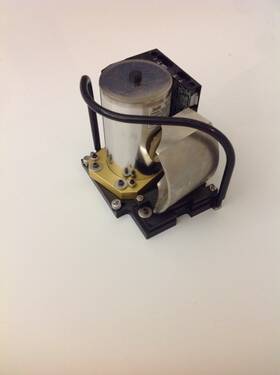
( Brand: Nicolet ), ( Manufacturer Part Number: 840-036600 ), ( Part Type: Detector ), ( Country Of Origin: United States )
Review NICOLET Liquid Nitrogen Crygenically Cooled Mct Detector From Ftir P/n840-036600
The **Nicolet 840-036600 Nitrogen-Cooled MCT Detector** is a high-performance, cryogenically cooled mercury cadmium telluride (MCT) detector designed for Fourier Transform Infrared (FTIR) spectroscopy applications, offering unparalleled sensitivity, speed, and reliability for demanding analytical tasks. Engineered for use with Thermo Scientific s Nicolet FTIR spectrometers, this detector leverages advanced MCT technology to deliver exceptional infrared detection capabilities across a broad spectral range, making it ideal for research, quality control, and process monitoring in industries such as pharmaceuticals, petrochemicals, materials science, and environmental analysis. The nitrogen-cooled design ensures optimal thermal stability by maintaining the detector at cryogenic temperatures, which minimizes thermal noise and maximizes signal-to-noise ratio (S/N), enabling the detection of even the faintest infrared signals with precision. With a fast response time and high quantum efficiency, this detector excels in kinetic studies, real-time monitoring, and complex sample analysis, where speed and accuracy are critical. Its robust construction and compatibility with a wide range of FTIR accessories including attenuated total reflectance (ATR), diffuse reflectance, and transmission sampling techniques further enhance its versatility, allowing users to tackle diverse applications with confidence. Whether employed in quantitative analysis, material characterization, or spectral fingerprinting, the 840-036600 MCT detector delivers consistent, high-resolution performance, making it a cornerstone for laboratories seeking cutting-edge infrared spectroscopy solutions.
### **Pros and Cons of buying a Nicolet 840-036600 Nitrogen-Cooled MCT Detector for FTIR**
#### **Pros:**1. **High Sensitivity and Performance** The MCT (Mercury Cadmium Telluride) detector is one of the most sensitive detectors available for FTIR spectroscopy. It provides excellent signal-to-noise ratio, making it ideal for detecting weak infrared signals, including trace compounds and low-concentration samples.
2. **Wide Spectral Range** MCT detectors are capable of detecting across a broad infrared range (typically 700 cm to 7,000 cm ), allowing for comprehensive spectral analysis without the need for multiple detectors.
3. **Cryogenic Cooling (Nitrogen-Cooling)** Unlike uncooled detectors, the nitrogen-cooled MCT detector maintains low operating temperatures, reducing thermal noise and improving detection limits. This is particularly useful for quantitative analysis and high-resolution applications.
4. **Durability and Longevity** High-quality MCT detectors, especially from reputable manufacturers like Thermo Scientific (Nicolet), are built to last with proper maintenance. The nitrogen-cooling system helps extend the detector s lifespan compared to uncooled alternatives.
5. **Compatibility with Nicolet FTIR Systems** This detector is designed specifically for the Nicolet 840 series, ensuring seamless integration with existing instrumentation. It is optimized for performance with the spectrometer s optics and data acquisition software.
6. **Versatility in Applications** Suitable for a wide range of analytical tasks, including polymer analysis, pharmaceutical testing, environmental monitoring, and materials science. It is particularly valuable in research and industrial settings where precision is critical.
7. **Better Than DTGS for Many Applications** Deuterated triglycine sulfate (DTGS) detectors are common but less sensitive than MCT detectors. The 840-036600 provides superior performance for applications requiring high sensitivity, such as trace analysis or kinetic studies.
---
#### **Cons:**1. **High Initial Cost** MCT detectors, especially cryogenically cooled ones, are significantly more expensive than alternatives like DTGS detectors. The purchase price may be a barrier for smaller labs or budget-conscious users.
2. **Maintenance and Cooling Requirements** The nitrogen-cooling system requires regular maintenance, including monitoring nitrogen levels and ensuring proper cooling efficiency. Failure to maintain the cooling system can lead to detector degradation or failure.
3. **Fragility and Handling** MCT detectors are delicate and require careful handling to avoid physical damage (e.g., from vibrations or improper storage). Improper installation or exposure to contaminants (e.g., moisture, dust) can reduce performance or shorten the detector s lifespan.
4. **Cooling System Dependencies** Unlike uncooled detectors, the performance of this MCT detector relies on a stable cooling system. Power outages or cooling failures can disrupt operations, requiring backup solutions (e.g., redundant cooling or battery-powered systems).
5. **Limited Lifespan Compared to DTGS** While MCT detectors are durable, they may not last as long as DTGS detectors under heavy or improper use. The cryogenic cooling process can also contribute to wear over time, necessitating eventual replacement.
6. **Training and Expertise Required** Operating an FTIR system with an MCT detector requires specialized knowledge, particularly in detector calibration, cooling system management, and data interpretation. Labs may need to invest in training or hire personnel with the necessary expertise.
7. **Potential for False Positives/Negatives** High sensitivity can sometimes lead to challenges in distinguishing true signals from noise, especially in complex samples. Proper calibration and method optimization are essential to avoid misinterpretation of results.
---
### **Ending Conclusion:**The **Nicolet 840-036600 nitrogen-cooled MCT detector** is a high-performance, sensitive, and versatile component for FTIR spectroscopy, making it ideal for applications requiring precision and low detection limits. Its advantages in sensitivity, spectral range, and compatibility with the Nicolet 840 series outweigh its drawbacks for labs engaged in advanced research, quality control, or industrial analysis. However, the high cost, maintenance requirements, and need for specialized expertise make it less suitable for basic or cost-sensitive applications where a DTGS detector might suffice.
### **Recommendation:** **Purchase this detector if:**- Your lab performs high-sensitivity infrared analysis (e.g., trace analysis, polymer characterization, pharmaceutical testing).
- You have the budget to invest in a premium detector and can accommodate its maintenance needs.
- Your existing Nicolet 840 system is already in use, and upgrading the detector will enhance its capabilities.
- You have personnel trained in FTIR operation and detector management.
**Avoid purchasing this detector if:**- Your applications do not require the high sensitivity of an MCT detector (e.g., routine qualitative analysis).
- Your budget is limited, and a DTGS detector would meet your needs at a fraction of the cost.
- Your lab lacks the infrastructure or expertise to maintain a cryogenically cooled system.
- You anticipate infrequent use, as the detector s performance may not justify its expense.
For most **research, academic, or industrial labs** with demanding analytical requirements, the **840-036600 is a worthwhile investment** that will significantly improve spectral quality and data reliability. However, smaller or less specialized labs should carefully weigh the cost-benefit ratio before committing to this detector.
Details:
Has three interlock safety switches in the bottom to turn off detector when module is detached from spectrometer. Don't have pin-out information and unable to test after removal. Can be used for experimenting high sensitivity far infrared/thermal detection, thermal imaging by adding a Gallo scanning system, etc. A DB9 connector in the bottom provides electric interface.
A liquid nitrogen cooled MCT Mercury cadmium tellurium, Hogtied far infrared detector with Dewar and an off-axis parabolic focusing mirror. The pre amplifier board attached to the Dewar has trim pots and test points clearly labelled. Saved from a retired old model Nicolet FTIR spectrometer. Nicolet part number 840-036600.
part #: 840036600 price
- $200.00
specifications industrlasemr:
- brand: Nicolet
- mpn: 840-036600
- part type: Detector
- country of origin: United States
offer industrlasemr:
- started: May 24, 2026
- sold: 0
- availability: In Stock
- options: Ship-to-home
- quantity: 1
shipping industrlasemr:
- type: Calculated
- class: Standard
- carrier: USPS
- service: USPS Ground Advantage
- transit: 6-12 Days
- cost: $43.01
seller industrlasemr:
- rating: 100.0%
- city: Miami, Florida
- # reviews: 1205
general industrlasemr:
- condition: Used
- Medical/Lab Equipment Attachments Accessories > Lamps, Bulbs Laser Components > Laser Modules Heads
returns industrlasemr:
- policy: No Returns
payments industrlasemr:
- other
- credit card: Discover
- wallet: Paypal
Nicolet 840-036600 Is Similar To:
- 840-0314 Nicolet H145315 Mct A (24.8% similar) This Nicolet mct a detector 20MA w mount appears to be in good cosmetic condition with normal signs of wear and previous use. No software, power cords, or other accessories are included unless stated above. It is untested and being sold as-is. All offered products are sold as advertised, is and ...(November 14th, 2017)
- Thermo Fisher Scientific 711-000900 Nicolet Magna Ir Source Everglo 550 560 750 760 850 860 Ftir (19.3% similar) 711-000900 Thermos Nicolet manga ir source overflow 550 560 750 760 850 860 ftir...(August 1st, 2024)
- Thermo 470-449500 Nicolet Is50 Ftir Spectrometer Laser Mod 101t-1400-4.5-ttl-1 (21.3% similar) No hardware defects. Cosmetic blemishes include minor scratches and/or other surface imperfections from consistent use, but equipment is in very good condition. May have broken or missing parts. May have light scratches or other minor blemishes from normal wear. Used equipment that has been fully ...(March 25th, 2026)