5ALDD 5LASER Diode Driver Hbled Analog Voltage Pwm Ttl Laser 5-AMP 0-5V Control
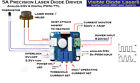
( Model: 5ALDD ANALOG ), ( Part Type: Voltage Control Driver Amplifier Laser )
Review 5ALDD Diode Driver Hbled Analog Voltage 0-5v Pwm Ttl Control
High-Performance 5ALDD 5-Laser Diode Driver with Analog Voltage and PWM TTL Control Amplifier
The 5ALDD 5-Laser Diode Driver is a cutting-edge, versatile device designed to power and manage up to five high-powered laser diodes, making it an ideal choice for various applications such as industrial machinery, scientific research, and creative projects.
This analog voltage and PWM TTL control amplifier boasts a wide voltage input range of 0-5V, providing precise control over the lasers' intensity. This feature allows for smooth and seamless adjustments, ensuring optimal performance and ensuring the lasers' output is tailored to your specific needs.
Equipped with TTL control, this driver allows for easy integration with microcontrollers and other digital devices, making it simple to create customized laser effects or to automate complex systems. The TTL control also ensures excellent compatibility with a wide range of electronic components and platforms.
In addition to its control capabilities, the 5ALDD driver is built with a robust amplifier to efficiently power even the most demanding laser diodes. This amplifier ensures stable and reliable operation, even under heavy load, ensuring consistent performance over extended periods.
The 5ALDD 5-Laser Diode Driver is designed with safety in mind, featuring over-current protection, thermal protection, and short-circuit protection. These safety features help prevent damage to the driver and ensure the longevity of the connected laser diodes, providing peace of mind during operation.
In summary, the 5ALDD 5-Laser Diode Driver is a powerful, versatile, and safe solution for managing multiple laser diodes. Its wide voltage input range, TTL control, and robust amplifier make it an ideal choice for a variety of applications, while its safety features ensure reliable and consistent performance.
Product: 5ALDD 5-Channel Laser Diode Driver with HBL-ED Analog Voltage (0-5V), PWM, TTL Control, Amp Laser
Pros:1. Multi-Channel: The 5-channel design allows for controlling multiple laser diodes simultaneously, making it suitable for various applications requiring multiple laser sources.
2. Wide Voltage Input Range: The input voltage range of 0-5V provides flexibility in power supply options, allowing for compatibility with various power sources.
3. PWM Control: Pulse Width Modulation (PWM) control allows for adjusting the duty cycle of the output signal, which can be used to regulate the intensity of the laser diode.
4. TTL Control: The TTL control feature enables easy integration with microcontrollers and other digital devices, providing a simple and efficient way to control the laser diode.
5. Amp Laser: The amplifier built into the driver ensures that the laser diode receives sufficient current to operate efficiently, reducing the risk of overheating and prolonging the lifespan of the diode.
Cons:1. Complexity: With multiple channels and various control options, the device may be more complex to set up and operate compared to simpler single-channel solutions.
2. Power Consumption: As an amplifier is built into the driver, it may consume more power compared to standalone laser drivers, which could potentially lead to increased heat generation.
3. Cost: Given the multiple features and channels, this device may be more expensive compared to single-channel, basic laser drivers.
Conclusion:The 5ALDD 5-Channel Laser Diode Driver offers a versatile solution for applications requiring the control of multiple laser diodes. Its wide voltage input range, PWM and TTL control, and built-in amplifier make it suitable for a variety of uses. However, its complexity, potential power consumption, and cost should be considered before making a decision.
Recommendation:If you are looking for a versatile and feature-rich laser diode driver for multiple diode applications, the 5ALDD 5-Channel Laser Diode Driver is a solid choice. However, if you only require basic control of a single laser diode, a simpler and more cost-effective solution may be more appropriate. Always ensure proper electrical compatibility and consider the specific needs of your application when selecting a laser diode driver.
Details:
specifications industrlasemr:
- model: 5aldd Analog
- part type: Voltage Control Driver Amplifier Laser
Ratings:
- Good buyer, prompt payment, valued customer, highly recommended. 08-23-17
- AAA thanks for your business - fast payment. Perfect! THANKS!! 08-22-17
- Hope to deal with you again. Thank you. 08-28-17
- Super fast payment, thank you for your purchase! 08-11-17
- Good buyer, prompt payment, valued customer, highly recommended. 08-17-17
Returns industrlasemr:
- paid by: Buyer
- policy: returns accepted
- type: Money Back
- time: 14 Days
Seller industrlasemr:
- city: Cocoa, Florida
- zipcode: 32927
Offer industrlasemr:
- quantity: 1
- bids: 0
- best offer: false
- Sold: 0
- Started: August 30, 2017, 9:56 am
Shipping industrlasemr:
- handling: days
- cost: $0.0
- type: Calculated
General industrlasemr:
- in stock: Yes
- condition: New
- businessindustrial > mroindustrial supply > lightinglasers > industrial lasers lighting lasers
Payments industrlasemr:
- PayPal
- VisaMC
- AmEx
- Discover